
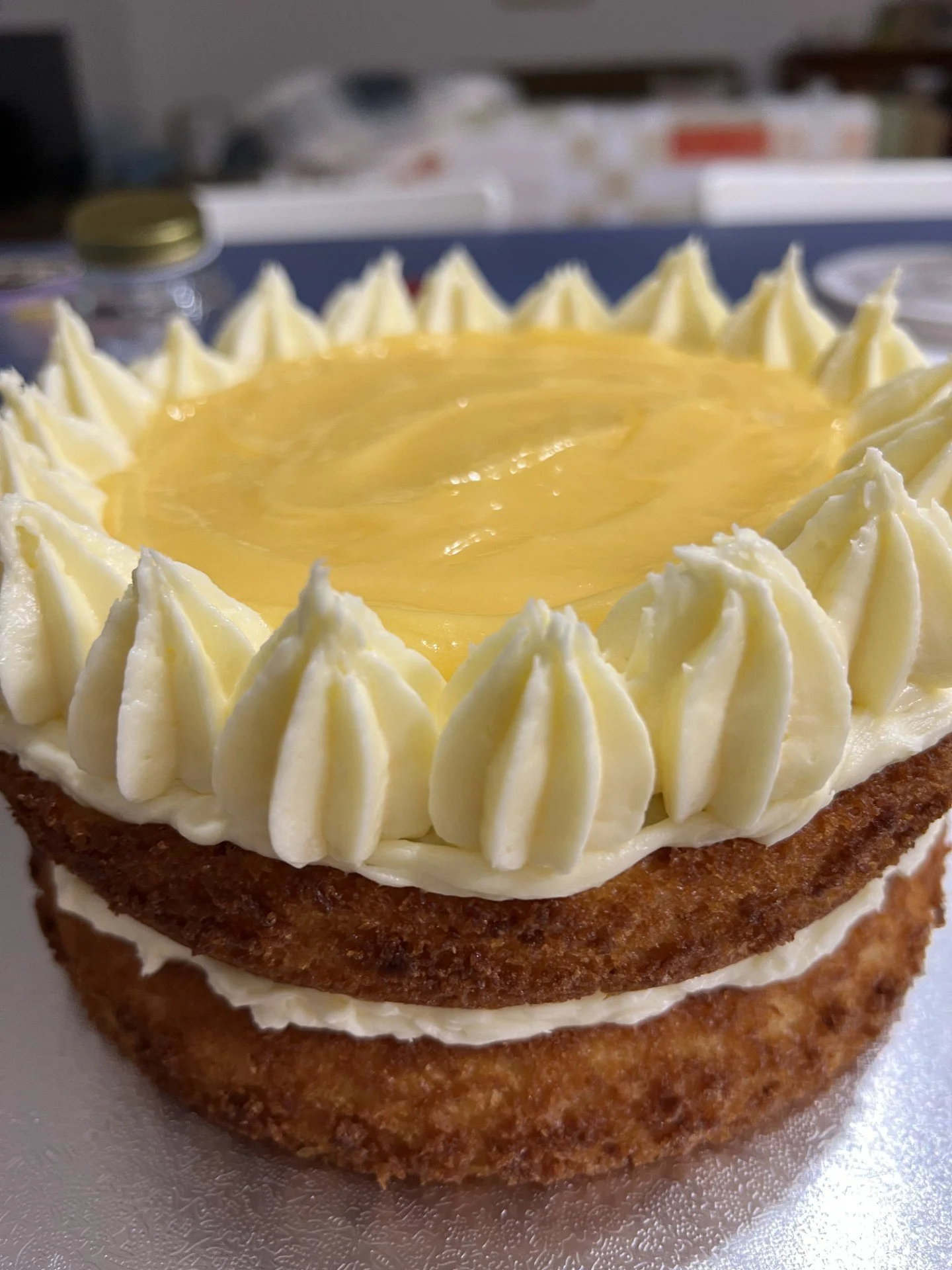
Right in the middle of a busy day at the gastroenterology practice where I work—amid triage systems, appointment books, audits, spreadsheets, workload pressures and difficult conversations—there was Thomas and a slice of lemon curd cake.
We had been waiting expectantly to meet him. Up until this point, we had only talked to him on the phone. Without looking at the data on the computer screen before me, I thought I was talking to a much older man, perhaps aged 84? But Thomas was only 54; his date of birth told me so. Something didn’t add up when I focussed on his grandfatherly cadence rather than the numbers on the screen. The melodious and gentle antiquity of his voice tricks you into thinking you are engaging with an octogenarian rather than a man in mid-life.
Thomas is a longtime family friend of Dr Pat, the doctor he was consulting with. We decided that, should he visit the consulting rooms, the occasion should be celebrated with cake; I was designated practice baker, responsible for providing it.
Thomas is a Lebanese Christian of the Maronite Catholic faith. This delightful man closes every phone call with “God bless you,” and I find myself having been generously blessed by each conversation. And when it was announced that Thomas was visiting the rooms, of course I had to drive home in my lunch break to retrieve an already filled lemon curd cake with cream cheese frosting from my freezer.
Thomas arrived at 3 pm, and I was captivated. He demonstrated a purity of spirit, a gentleness, a deliberate and patriarchal quality to his measured speech and he spoke unashamedly of a profound faith in God. It left me feeling like this man had a direct line to God.
People like Thomas have a way of giving perspective to our own lives. His doctor had diagnosed Thomas with a difficult illness that is common in people of his cultural heritage. Thomas spoke to us of peace and being “right” with God and to arrive at this peace one must be forgiven and be willing to forgive others. Thomas felt he was “right” with God”, should the outcome of the illness not go so well, but the outcome has been good, very very good. Thomas declared in conversation that he will give it five years and then proclaim that he has been the recipient of a miracle!
Thomas had his consultation with his friend, Dr Pat, and the sound of laughter and joy came from the room as the two friends shared a conversation over a coffee and slice of lemon curd cake.
In an earlier life, Thomas, we are told, tried to join the order to become a Maronite priest. For reasons we do not know, Thomas didn’t continue towards priesthood, but Thomas lives every day ministering by the example of his life as he quietly bears witness to his deep and profound faith. In my mind I can truly imagine Thomas at the pulpit had he been successful in his quest to become a priest. What a witness he would have been to the congregants in his flock!
A day that could so easily have been described as ordinary became memorable because Thomas arrived. Most of us may have met someone like this once or twice in our lives. Thomas walked into the room and somehow the pace changed. He didn’t dominate the room; he quietened it because all of us there were receptive to stop and listen and be willingly present in the moment.
Whether one shares Thomas’ faith in exactly the same way or not, there are people whose hope, kindness and peace seem almost disproportionate to their circumstances. They remind us that our character isn’t determined solely by what happens to us.
There was something both hopeful and humble about the way Thomas spoke about his diagnosis. He wasn’t denying his illness. He simply believed that his future wasn’t defined solely by a medical condition.
Watching Thomas, I found myself smiling at the thought that if I were ever asked to describe a saintly person, I would begin with someone very much like him. Not because he claimed perfection, but because there seemed to be so little distance between what he believes and the way he lives.
His visit reminded me that medicine is still about the people. Sometimes the most memorable part of the day isn’t a new system or a clever workflow. It’s sitting around a table with a gentle man, sharing cake and listening to him speak about hope.
These moments have a way of nourishing the staff as much as the patient.
I hope Thomas left our practice feeling welcomed, valued and celebrated, not because of his illness, but because of who he is. As for the rest of us, we returned to our referrals, appointment books and ringing telephones, quietly aware that grace knocked on our door that afternoon, accepted a slice of lemon curd cake and left each of us somehow richer for the visit.
Jeannine Lewis